


Writing staff performance reviews is one of my favorite parts of being a manager. At their core, reviews are stories, each unique to an individual, set within the shared context of our organization. At our company, everyone also writes a self-evaluation. Mine usually meanders, touching on high level accomplishments and frustrations, reflecting on the existential elements of work and purpose. I imagine the HR people who skim my submissions have plenty of ’What the fuck?’ or ’Ok…hmmm’ moments. This year, I wrote about my recent eleven year anniversary, how I didn’t think about it in celebratory terms, how the feelings are… mixed. Eleven years is more than a quarter of my life. And I’ve spent that time—essentially half of my entire career—at one company.

I told my boss recently that I was tired of working for our organization, in my current role; tired of being at the nexus of healthcare policy and politics, on an endless see-saw ride. I’d hoped to move on before America rolled the dice once again, re-electing someone who tried to dismantle the ACA last time around. But that didn’t materialize—I returned to the same place after my sabbatical and here we are.
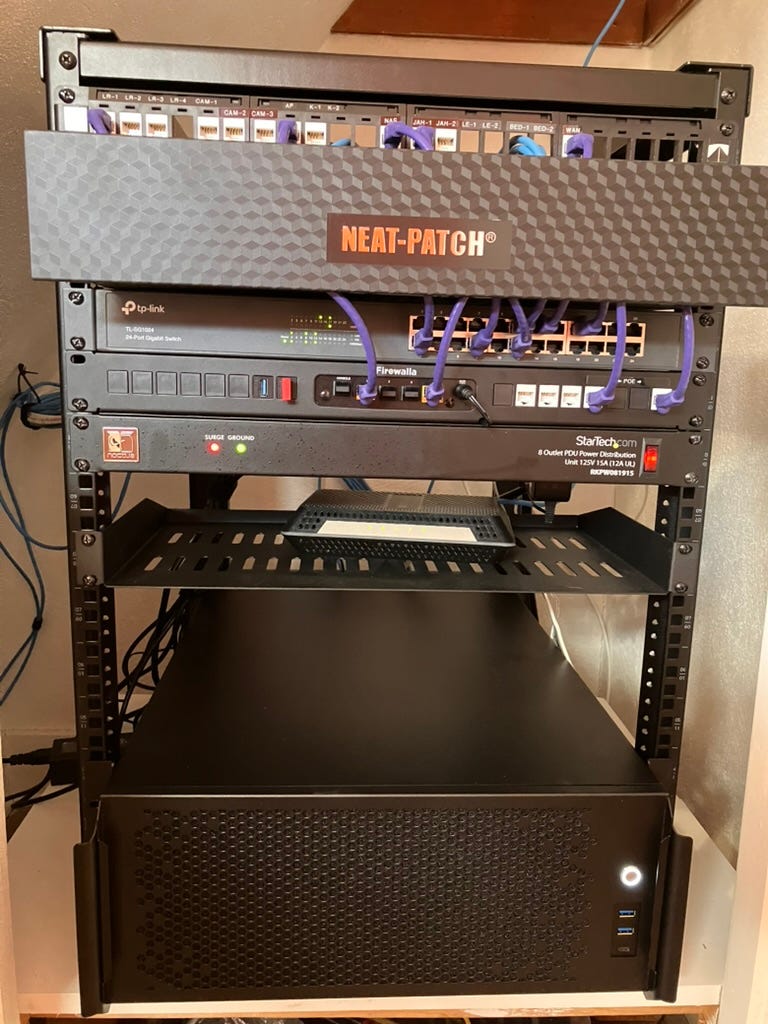
What tends to happen when I’m tired or bored (usually these states are interrelated) is I find a new project to dive into, or restart one I’d shelved in the past. Over the past few months I’ve done both: I built a home server and I taught myself how to create applications leveraging AI. The latter also dovetails with another body of work—helping Lindsay sell through remaining inventory from her primary online store as she scales down and refocuses her business.
Some backstory and context: I know a fair amount about what goes into designing, building, releasing, and maintaining software products. This is the work I’ve been doing for over a decade, in various product roles on software teams, and now in a managerial capacity. The role of developer is one that’s always fascinated me and I have a broad understanding of the work they do. In fits and starts, at various times, I tried to learn how to write code. I started with javascript and python, took online courses, read books. But the foundational concepts of these languages never seemed to click and every attempt would end with me quitting in frustration. The language of code feels unnatural—too abstract, too much like math (which I was never good at). I could imagine things I wanted to build, I could describe them, and I understood where code might be employed, but I lacked some fundamental way of conceptualizing the language.
I dabbled with low-code platforms that use business rules, tools what let you connect different apps together, but I’d usually bump up against some limit, either in the logic or the price. A few years back, I took this a step further, with an early agentic tool that would write code for you based solely on plain English prompts. It worked—kind of. I spent countless hours debugging with the AI because it would constantly make stupid mistakes, syntax and formatting errors, or worse. We’d go through cycles of this and while I eventually made some progress, the tool was so error prone that I was unconvinced of its utility.
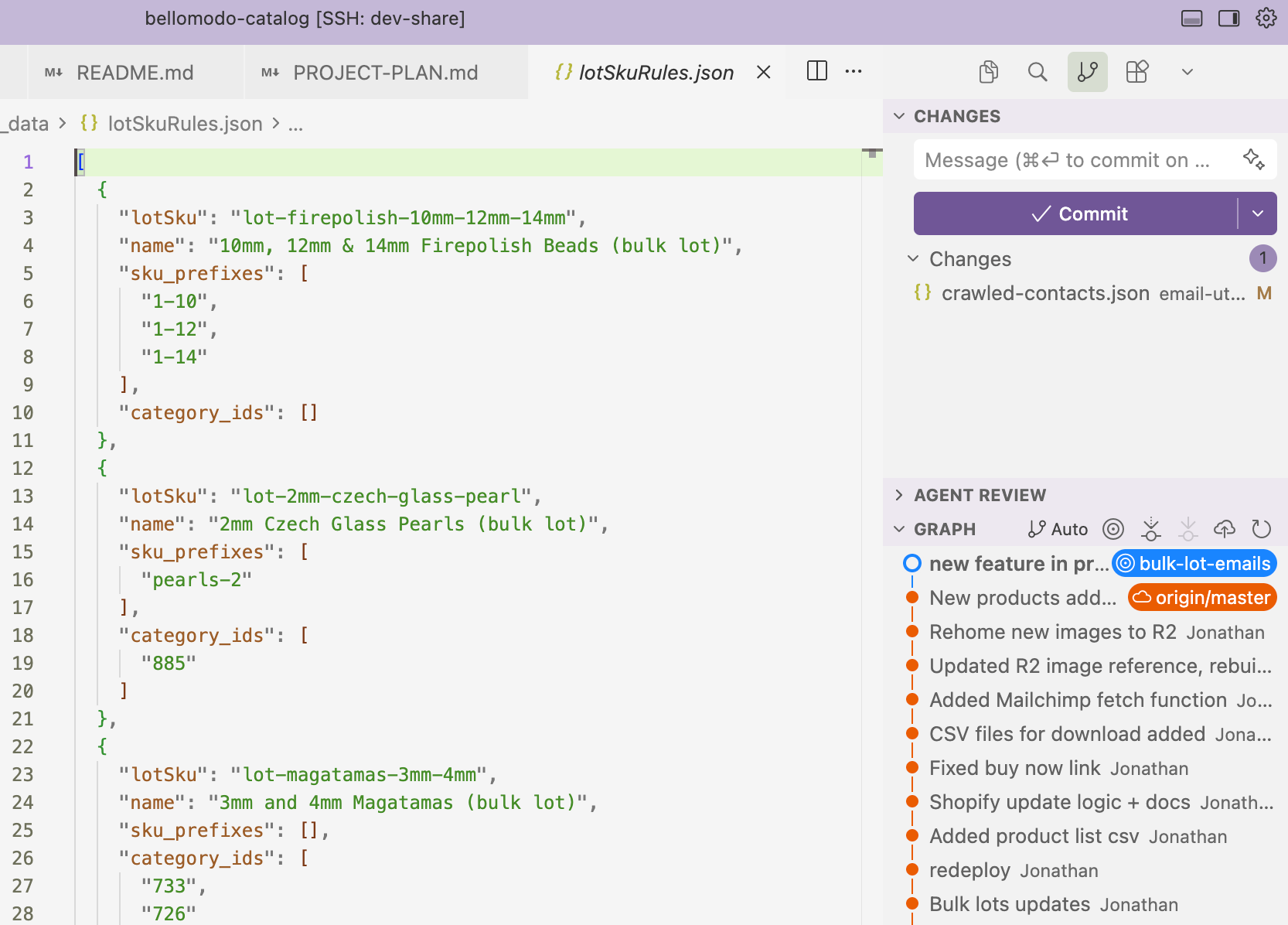
About a month ago, I decided to see what the latest generation of AI development tools could do. There was another project--migrating a large product catalog (20,000+ items) from Lindsay’s old site to a new location, primarily so the descriptions and photos would still be available, even as we turned off the old sales platform. Within hours, I had a working prototype and a project plan, constructed with the help of an AI agent, which felt like magic. I started having lightbulb moments, tools and concepts I knew about but hadn’t used before all start to make sense in context—IDEs, git, automated deployments. The experience has been revelatory. I am able to use skills I do have (writing, planning, architectural thinking) to build actual working software. And I’ve begun to map out ways I can leverage these tools and the capabilities they confer at work, home, and for small business ventures.
I was, admittedly, a AI skeptic at first1. The early chatbots felt like tech fads, little toys that didn’t provide much practical value. The smarmy, overwritten output, all saturated with pointless metaphor annoyed me2. My recent experiences building things with the aid of an agent changed my mind and I’d consider myself sold on the notion that this is the future. Increasingly, I hear what people like Andrew Yang, Mustafa Suleyman, and Dario Amodei are saying—predicting that we have a 1-2 year timeline until AI agents and the models that power them can do many/most white collar knowledge work jobs—and I think yeah, I see it, based on my experience, if we continue on this trajectory it seems like this is exactly where we are headed.
The prospect isn’t frightening from where I sit right now. Mostly, I see opportunity. If this is coming, then now is the time to prepare, to learn to use the array of tools currently available, to build knowledge and experience with them, to practice training agents to do work for you in ways that make sense. All of these developments are very exciting—it feels like we are living through a period of unprecedented technological change, and I’m eager to see where it leads.
My yearly self eval is a story of work projects and personal ones bleeding together in curious ways. I continue to wrestle with this generalized sense that I could be doing more—taking on more responsibilities, contributing in new ways; I don’t feel stuck (not anymore), but I do feel unempowered, like a bench player who is ready but rarely called upon. Maybe this is just part of how careers go. I’m learning to be less reactive and more hopeful, to push in a direction without being too attached to a particular outcome, to seek contentment.
I still absolutely will not use AI for writing that I care about—marketing copy is fine though.