


The spaces beneath stairwells are odd, angular places. In our house—technically, we only have one floor—a narrow and steep column of stairs ascends to a room we call the Upside Down. It’s an otherworldly place, where one window faces the outside, the east side of our yard, and the other window peers into a dark, unfinished attic. At one point in time, it was an exterior window, a piece of the original house, built in 1929. If you crawl through it, into the attic, and look back, you can see into the past, a house that existed in another era.
Below the stairs, within the room that’s become my home office, is a small closet. Years ago, I took the door off because its outward swing into the room annoyed me. If a door can hit another door or doorway by virtue of being opened, well that’s a problem. The door had to go and in its place I built a set of shelves set between the door frame. I even painted it to match the surrounding walls and added trim. Quickly, the shelves were filled with books and journals and…networking equipment.
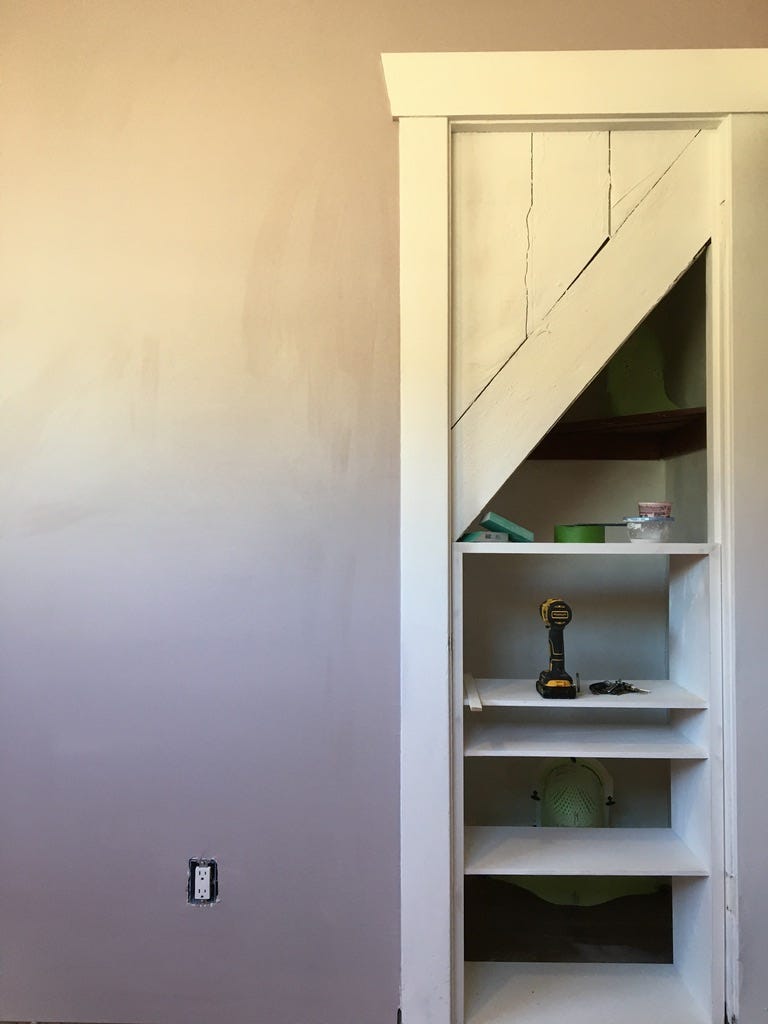
I didn’t set out to have this built in shelf become a hub for our home network, but that’s what happened—a matter of convenience mostly, a place where wires and switches and components with green and yellow blinking lights could be stowed away, out of sight. It’s served this purpose well, but now I am rebuilding it, making better use of the tiny area, adding more functionality, and bringing a level of order to this little closet. No longer will the shelf hold books and oddball items like box knives and extra pens—it will be dedicated to rack mountable equipment, a version of something you might find in a mid-sized office building, a professional-looking setup that wold be immediately familiar to a network technician. The jumble of cables and wires will become tidy, all bundled together, labeled and orderly.
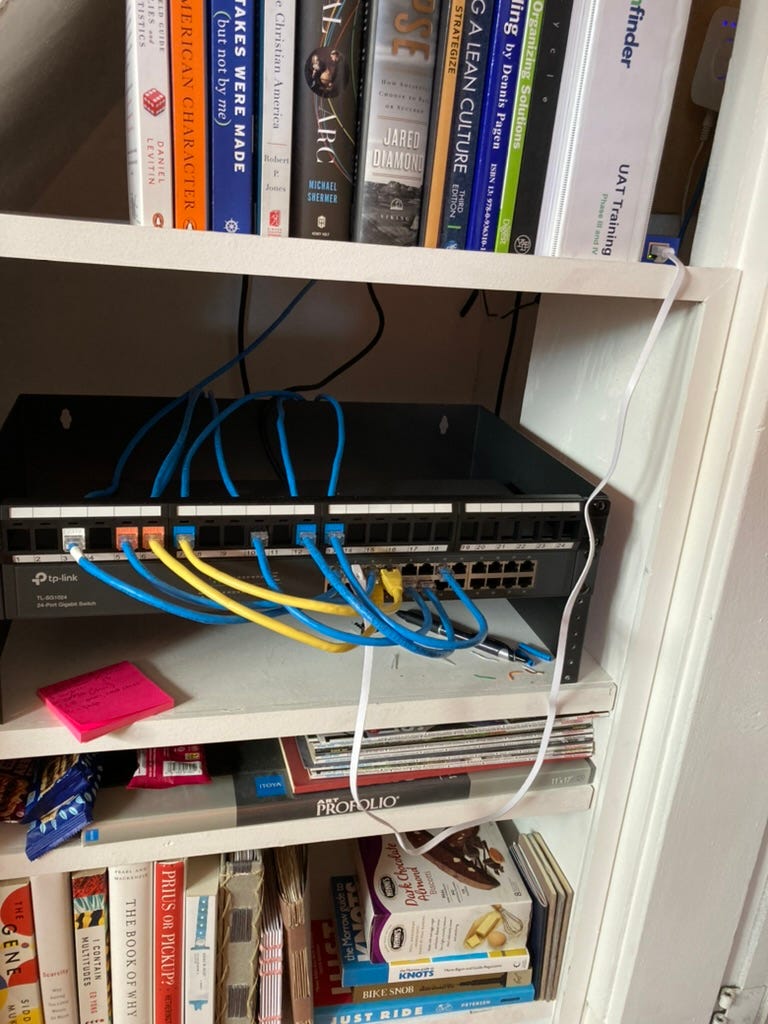
Is this overkill? Perhaps, but aspiring to this level of organization, creating models and diagrams, crafting a vision for a physical space… it’s deeply reassuring, calming, almost meditative. Lately, I wake up in the morning thinking about these components, how they will fit together, what purpose they will serve. I have a vision that is singular and immediate; the preoccupation is a sort of joyful obsession.
The rest of our house, in its present state, is at once highly organized and somewhat cluttered. The beads and bits all packed and labeled hang from pegboard hooks in sequence, by section. Our collection of vinyl records, similarly, live in alphabetical order, tucked on a shelf beneath the turntable. And in the shop (which is overflowing with items displaced from our home to make room for inventory), a wide variety of tools have permanent homes, in drawers with labels or spaces on wall racks, little magnets holding them in place until they are needed.
Sorting like with like, ensuring the right things are cataloged and placed in an accessible and memorable location—I daydream about this. I imagine all of the cables and adapters we own, where they should live, how they would be labeled. I also ask myself: if I was giving a friend instructions on where to find something, (let’s say they are housesitting while we’re on vacation) how could I organize things to make this as simple as possible? “Go to the office—the orange room at the end of the hall—there’s a drawer beneath all the computer type stuff, pull that out and look for a container labeled ‘A/V’. You’ll find the HDMI cables there.” With this in mind, I ordered more of my favorite crates and sorted every cable and adapter and part. They will all live in a deep drawer beneath the rack that houses the brains of our network. I will not need to wonder where something is, I will know definitively.
It’s possible this search for order, the desire to exert control over objects and space is the product of my lack of control over the pesky cells that continue to grow and shift positions in the walls and tunnels of my face. The only part that’s predictable is the cycle of recurrence—every one and a half to two years. And here we are again. I have another tumor and another surgery will happen early next month.
I’m thinking past this occurrence to the next one, the path that aberrant cells will follow. Will they breach an area more fragile, deeper in the recesses of my bespoke facial anatomy? It sure seems likely, or perhaps we will keep playing whack-a-mole in the same spot, excavating until we must rebuild. Maybe bony intrusion happens again, complicating matters. There are a myriad of scenarios and I’ve considered most of them, meditating on how I would approach the decision making, knowing that I’d like avoid another set of life altering reconstructions. But it’s impossible to predict what choices I will face. Right now, I am more concerned with the closet.
The whole point of running all these wires is bandwidth and reliability. Wired connections carry greater volumes of information, without being subject to interference and obstacles as wireless ones are. Copper is steady, but it does require more effort to install. I’d run ethernet wire before, in a somewhat haphazard fashion, down through the crawlspace, up again into the desired room, peeking out through a hole in the floor where a vent register once was. I didn’t go to any great lengths to make the install look tidy—all that mattered was function.
I’ve been thinking more about what it means to make things that are durable, designed for now while mindful of the future. The closet project is also a test—can I deliver on an idea? Will my body cooperate? The act of writing the book was physical, in that I wrote it by hand and sat for long stretches of time, but building a space out of wood and wire and drywall is a very different sort of labor.
I found myself back down in the crawlspace over the past few weekends, pulling wire, bundling it together with length of velcro cut from a roll, attaching special zip ties to floor joists, lifting the data lines off the floor. Last time, I hadn’t really planned ahead—I’d run just enough wire for what I needed, but now I was considering the future, where a newly finished kitchen makes a living room update possible. The network cables will already be there, waiting to be pulled up, arranged in a box, terminated, tested, and labeled.
The wires are where they need to be and we are on schedule. This is the sort of confidence I need for a kitchen project, and the upcoming surgery is a brief detour. The sheer amount of work involved is daunting, the investment significant, and the impact decades-long. I wouldn’t want to walk right in without first demonstrating my ability to construct something, to be reminded that I haven’t forgotten.